The anatomy of a New York slice, in six parts.
There is a right way to make a New York slice and a lot of wrong ways that get sold as "artisan" or "gourmet" or "wood-fired." We only make one kind of pizza here, and we have been making it the same way for twenty years. Here is exactly what goes into a Rustic Roots pie — and why none of it is negotiable.
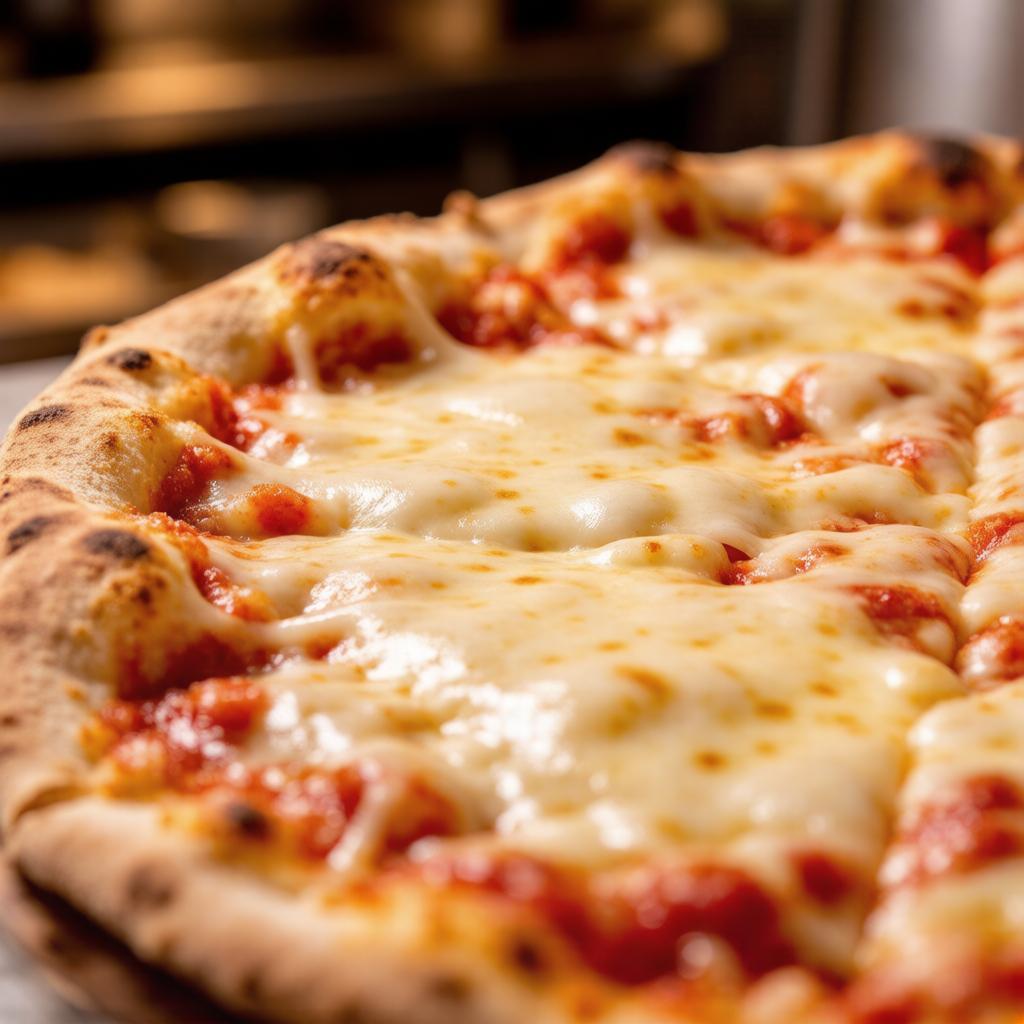
The dough rests for two days before it does anything.
Every Thursday morning, our dough is mixed in a large tub using just four ingredients: high-protein bread flour, water, sea salt, and a whisper of commercial yeast. It gets kneaded by hand for about eight minutes, covered with a damp towel, and left at room temperature for one hour. Then it goes into the walk-in cooler, where it stays for forty-eight hours before it ever touches a pizza peel.
That long, cold fermentation is the entire secret. During those two days, enzymes in the flour break down complex starches into simple sugars, and the yeast produces carbon dioxide slowly — very slowly — creating tiny, even bubbles throughout the dough. The gluten relaxes. The flavor deepens. The final crust, when it hits the oven, comes out blistered, chewy, faintly sour, and light enough that you can eat four slices without feeling like you swallowed a brick.
The alternative — a quick, warm rise, finished in three hours — makes pizza that looks almost identical and tastes nothing like it. It's dense, bland, and gummy in the center. We know because we tried it in the early days, back when we were still learning. We never went back.
Anatomy of a pie.
Six layers between the peel and your plate. In order of encounter.
The Rim
The puffed outer edge, dark-spotted and slightly blistered from the 550-degree oven. It should be chewy and airy, not crunchy. Anyone who says the crust is their favorite part is not being polite — the rim is where the fermentation shows.
The Crust
The thin middle layer, slightly crisp on the bottom, soft enough to fold. Our pies are stretched by hand on a wooden peel and slid directly onto the stone, which is why the underside has the mottled, charred look of a real New York slice and not the uniform pale of a conveyor oven.
The Sauce
San Marzano tomatoes, crushed by hand, salted lightly, and — this is important — never cooked. The sauce goes onto the pizza raw and cooks in the oven. Precooking it makes the sauce sweeter and darker and, in our opinion, much worse.
The Cheese
Whole-milk, low-moisture mozzarella, shredded fresh in our kitchen every afternoon. Not pre-shredded, which is coated in starch and turns greasy under heat. Some pies get a second cheese — fresh mozzarella for Margherita, aged provolone for the special — but never more than two. A pizza is not a cheese plate.
The Toppings
Restraint is the whole game. Three toppings, maximum. Each one has to justify its presence. If you can't taste the crust and the cheese and the sauce beneath the toppings, you've added too much, and the pie is worse for it. This is not a rule we invented. It's a rule New York figured out a long time ago.
The Finish
The last thirty seconds, done at the counter before the pie goes in the box. A drizzle of good olive oil. Torn basil, if the pie calls for it. A thread of hot honey on the pepperoni. A hard grate of parmesan. Never all at once — the finish has to match the pie.
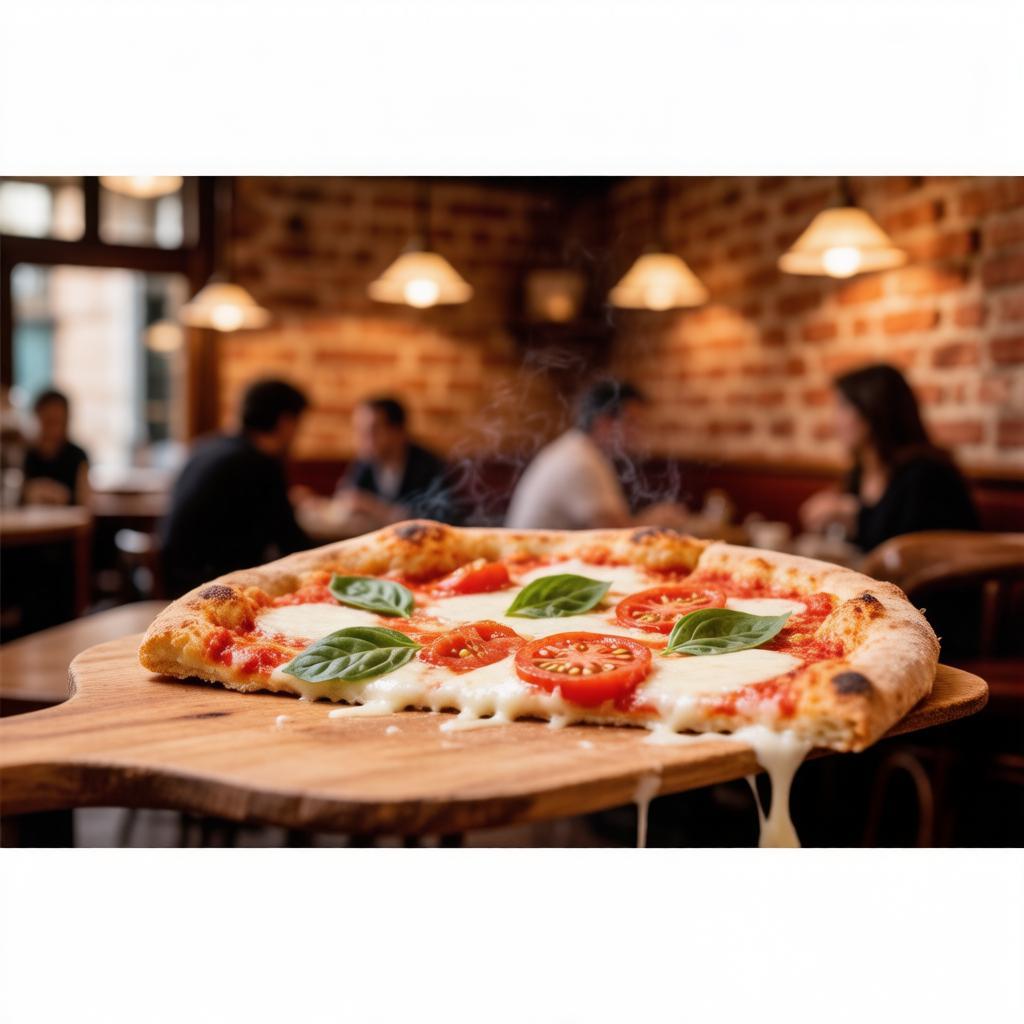
The oven is not an appliance. It's an instrument.
Our oven runs at 550 degrees, with a stone hearth that holds heat the way a cast-iron pan does. A sixteen-inch pie goes in raw and comes out fully cooked in six to seven minutes. That is not a marketing number — it's what the timer says and what the crust looks like when it comes out. Any longer, and the cheese browns before the bottom of the pie has set. Any shorter, and you get raw dough in the middle.
The recovery time matters more than the temperature. A conveyor oven keeps a constant temperature but never gets the stone hot enough to do the important work: flash the moisture out of the dough, blister the rim, and set the bottom of the crust in under a minute. A deck oven loses heat each time the door opens and has to be given time to recover. We manage that. We give it the time. That's the entire difference between real pizza and the pizza you'll find at a chain.
The other thing a deck oven gives you is direct contact. The peel slides the raw pie directly onto the stone. No screen, no pan, no silicone mat. The stone touches the dough and caramelizes the bottom. That's why the underside of a Rustic Roots pie has those dark, uneven spots. That's the point.
How to eat a slice, in five unhurried steps.
We are not going to tell you how to enjoy your dinner. But if you want to eat a New York slice the way a New Yorker eats a New York slice, there is a method, and it works.
Pick it up.
With your hands. Not a fork. Not a knife. A slice is built for eating on the go, and it knows what it's doing.
Fold it.
Lengthwise, crust to point. This is not a preference — it's structural. It keeps the toppings from sliding off and the tip from flopping.
Eat from the point.
Bite the tip first, then work your way up. The point is the thinnest, hottest, crispest part. It's the best part. Don't save it for last.
Don't dab.
If there is orange oil on top of the cheese, that's the good stuff. Blotting it with a napkin is between you and your conscience.
Order a second.
Because you're going to want one, and it's easier to order it now than to get back in line.
What we don't do.
Just as important as what goes into our pizza is what doesn't. A short list:
"Good pizza is not complicated. It is just patient. Two days for the dough, six minutes in the oven, one minute to fold it and eat it. That's the whole thing."
The best way to understand any of this is to eat a slice.
Order online for pickup, or come sit at the counter and watch the kitchen work. We're happy to talk pizza for as long as you want.