From flour to fork, in one morning.
The pasta you eat at seven o'clock started as a bowl of flour at ten in the morning. Between those two moments there is rolling, cutting, dusting, resting, boiling, and a half-dozen small decisions that make the difference between pasta that tastes like something and pasta that is just a vehicle for sauce. Here is how we do it, and why.
Four steps, every morning, before the doors open.
There is no shortcut and no workaround. If we skip a step, the pasta is worse, and we notice. Our regulars notice. It is the kind of thing you can't fake for long.
The Flour
Semolina and tipo 00, measured by weight, not volume. Whole eggs from a Vermont farm, a pinch of salt, a splash of olive oil. Mixed by hand on a wooden board, because the warmth of the hand is part of the recipe.
The Sheet
The dough rests for thirty minutes, wrapped tight, then goes through the sheeter six times, getting thinner each pass. The final sheet is translucent enough to see the shadow of your hand through it. Any thicker and the pasta is heavy. Any thinner and it tears in the water.
The Cut
Fettuccine, spaghetti, tagliatelle, pappardelle — the cut depends on the dish. Hand-rolled shapes (trofie, cavatelli) are shaped one at a time, by hand, between the palm and the board. This is slow. It is supposed to be slow.
The Rest
The cut pasta gets dusted with semolina, arranged on trays, and covered. It rests until service — at least four hours, sometimes more. The rest lets the dough firm up and the surface dry out just enough that the strands don't stick together in the water.
Six forms, six reasons.
The shape of the pasta is not a decorative decision. Each one is designed to hold a specific kind of sauce, in a specific way.
Fettuccine
Wide, flat ribbons. The broad surface catches cream and butter sauces and holds them in place. Alfredo, carbonara, a simple butter-and-parmesan. The workhorse of the northern Italian repertoire.
Spaghetti
Round, thin, and just toothsome. Spaghetti works with tomato sauces because the round shape holds a light coating of sauce without drowning in it. Our Sunday sauce is built for spaghetti and it would not taste the same on anything else.
Rigatoni
Wide tubes with ridges. The ridges catch chunky sauces, and the hollow center traps sauce inside each piece. When you bite into a rigatoni, you get sauce from two directions. This is why it works with vodka sauce and sausage ragù.
Trofie
Short, twisted, hand-rolled. A Ligurian shape, traditionally served with pesto. The twists trap the pesto, the potato, and the green beans in a way that a smooth pasta simply cannot. We roll these by hand. It takes an hour to make enough for one service.
Tonnarelli
Spaghetti's thicker, squarer cousin. Made from an egg dough rather than a water dough, so it is richer and more tender. Cacio e pepe is tonnarelli's native dish — the pasta was practically invented for it. Anything with pecorino, really.
Lasagna Sheets
Large, thin rectangles, rolled to order. They need to be thin enough to see through, because they will be layered with ragù and béchamel and baked — any thicker and the whole dish becomes a brick. Our sheets are the thinnest thing we make.
The Sunday Lasagna, in full.
It is the dish we are proudest of and the one we sell out of first. Here is everything that goes into it, in order.
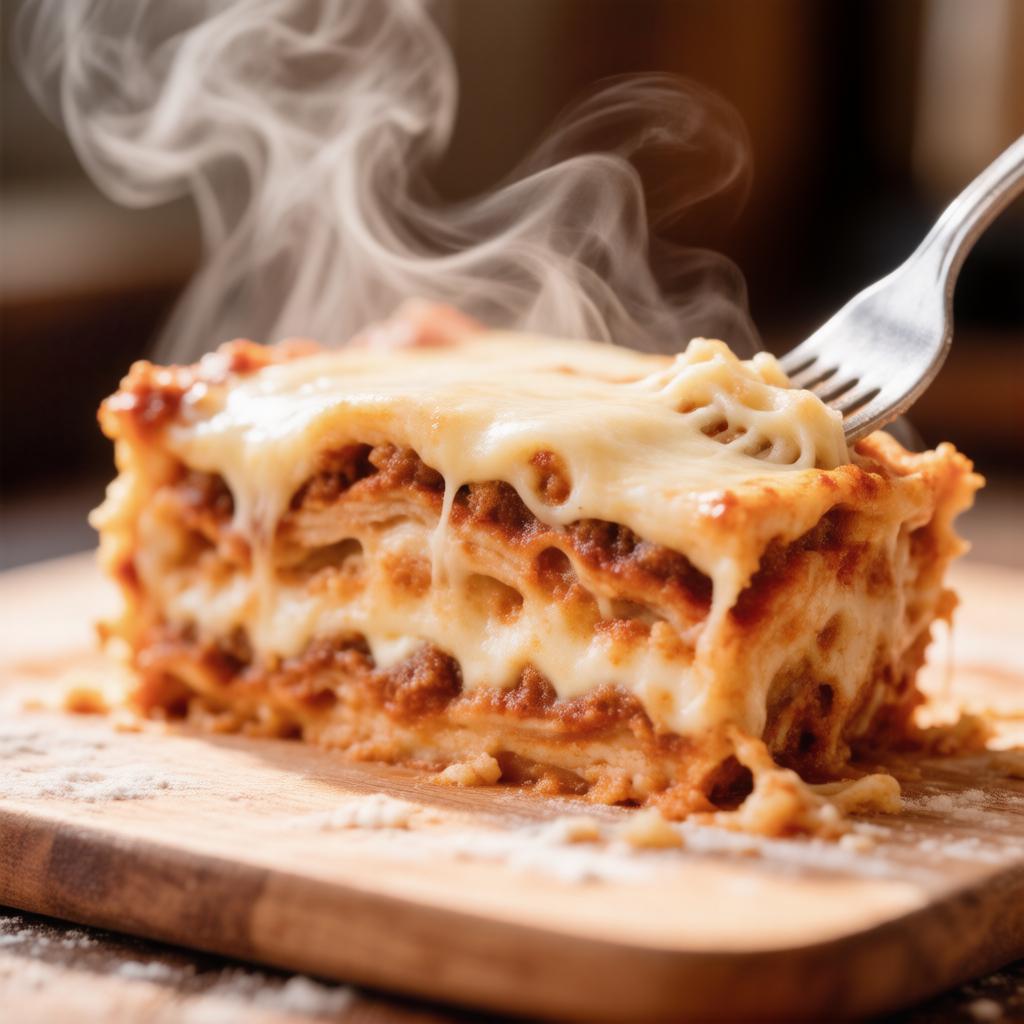
Ground beef and pork, soffritto of onion, carrot, and celery, a splash of red wine, whole peeled tomatoes, a bay leaf, a parmesan rind. Cooked low and slow on the back burner from two in the afternoon until six. It reduces by half. The fat rises, gets skimmed, and is used to grease the baking dish.
Butter, flour, whole milk, nutmeg, salt. Whisked by hand, not blended. A blender makes béchamel too smooth and the layering loses its character. We want a sauce that coats the back of a spoon with a little bit of texture.
Rolled, cut to fit the pan, blanched for fifteen seconds, and laid out on towels. Fresh sheets don't need to be boiled to al dente the way dry noodles do — they just need to lose their raw starch so they don't taste of flour.
Sheet, ragù, béchamel, parmesan. Sheet, ragù, béchamel, parmesan. Sheet, ragù, béchamel, parmesan. Six layers, sometimes seven. The final layer is béchamel and parmesan only, no ragù — so the top browns evenly and forms a crust.
Covered for the first twenty-five, uncovered for the last twenty. Rested for fifteen minutes before slicing — this is the step everyone skips at home and it is the most important one. If you cut a lasagna fresh out of the oven, it slumps. Rest it, and the layers hold.
We are not snobs about dry pasta.
Some dishes actually want dry pasta. The industrial bronze-die extrusion of a good dried pasta gives it a rough surface that grabs certain sauces better than fresh ever will. Amatriciana wants dried bucatini. Cacio e pepe traditionally wants dried tonnarelli. A quick weeknight aglio e olio wants dried spaghetti.
We use fresh pasta where fresh pasta is the point: alfredo, lasagna, ravioli, anything where the egg dough is the star. We use dried pasta where it is the better ingredient: cacio e pepe, the occasional special, a few of the salads. It is not a rule. It is a judgment call, made dish by dish, by the cook.
"Fresh pasta is not automatically better than dry. It is different. Knowing which to use is the craft."
Order a plate and see for yourself.
Everything you just read about is on the menu tonight. The lasagna if we haven't sold out, the fettuccine, the cacio e pepe, the pesto trofie. Order online for pickup or come sit down and order a glass of red with it.